Did you know that the answer to this question could have ramifications on how well you sleep at night?
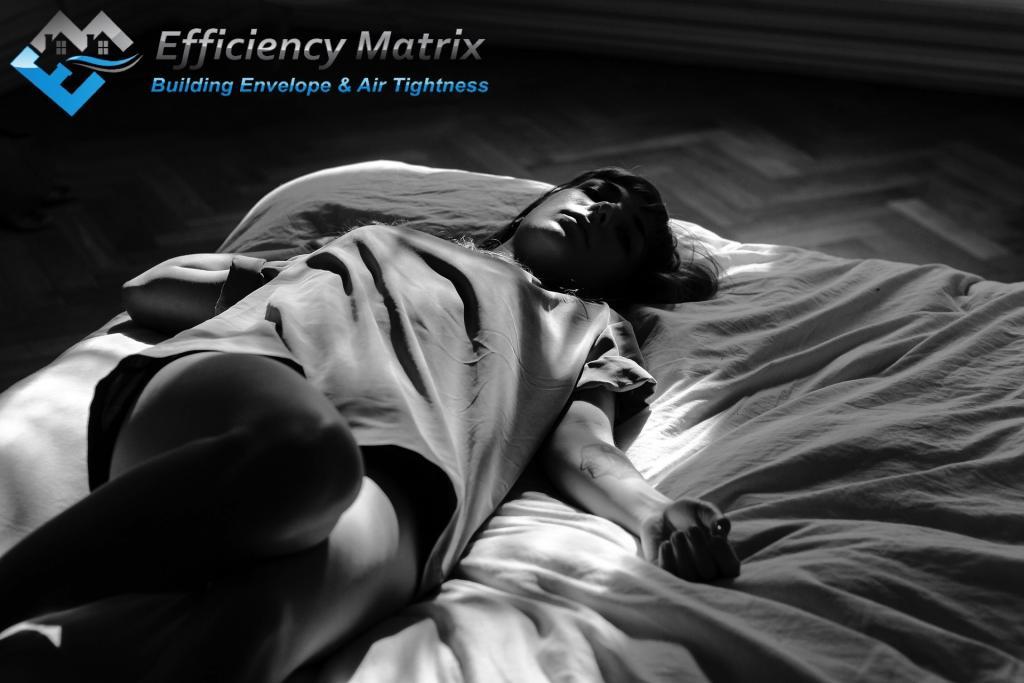
There are two sides to every argument. The most popular key issues in regards to answering the question of sleeping with the door open or closed are:
- Fire safety,
- Psychology
- Feng Shui
- Lastly but not less importantly, Overall Air Quality
Both Fire Safety and Feng Shui are on the side of sleeping with the bedroom door closed, and here are the reasons why.
Fire Safety:
Should a fire begin in a home outside of the bedroom, a closed door significantly reduces the amount of smoke that makes it inside the bedroom with a sleeping occupant. Refer to NFPA reference below.
Feng Shui & Psychological needs:
Closing the bedroom door provides privacy, especially if you live with other people. It can provide a sense of security, which relaxes survival instincts Reduce noise coming from within the home, e.g. humming of the refrigerator or noisy occupants.
Fire Safety issues that could occur when sleeping with the door closed:
With the advent and increased use of fire/smoke alarms, some problems can arise from sleeping with a door shut:
- If a bedroom door is closed, the smoke produced by the fire may not reach the smoke alarm, depending on where it is located. With a door closed, less air will be able to move towards a smoke alarm, reducing the chances of the alarm being triggered sooner rather than later.
- The occupants may not hear the alarm behind the door if they are in a deep sleep.
- If the fire starts in the room that the occupant is sleeping in, the smoke alarm may not be triggered.
Air Quality / Quality of sleep:
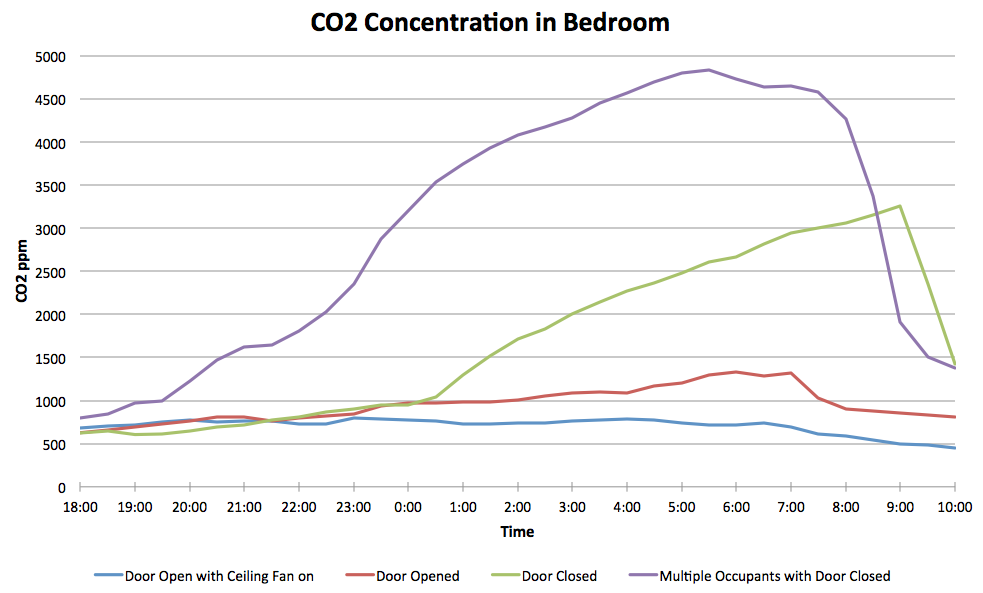
Air Quality, is probably the most underrated consideration, but for some people may be an imperative one. CO2 concentrations can go higher than 4000ppm in an Australian ordinarily constructed leaky bedroom/house, should two people be sleeping in the bedroom with their door closed. Sealing up all the cracks in this room will ‘NOT’ make a predictable difference worsening the overall CO2 building up in the room. CO2 Buildup in homes that are leaky suffers a very similar fate as more air tight buildings when you are dealing with such a small area that has a CO2 source.
Efficiency Matrix has captured CO2 data in a bedroom located in Melbourne Victoria. It varied considerably but this is how CO2 builds up till the morning until the occupant gets out of bed, and exits the room allowing the CO2 to pour out into the rest of the house.
Purple – Leaky bedroom Door closed, two occupants and no ventilation
Green – Leaky bedroom Door closed, one occupant and no ventilation
Red – Airtight room with, one occupant and door left open
Blue – Airtight room with, one occupant, door left open, with the ceiling fan in use.
 There have been many scientific papers written, which have validated poor quality sleep, and overall alertness/brain function, in high CO2 environments is degraded. Research in school kid performance in High CO2 in classrooms is exceptionally convincing.
The CO2 within the bedroom which has its door left open can mix quite well and leverage off the fresher air and a greater leakage/infiltration/exfiltration rate overall from the rest of the building envelope, maintaining a lower CO2 concentration in the bedroom. Putting in place additional strategies can improve bedroom air quality even further.
Possible solutions:
1. First priority is to install interconnected smoke alarms throughout the building, install units as close to bedroom doors as possible and inside bedrooms. Refer to Australian standards for direction on locations. Interconnected smoke alarms will trigger all detectors, in the event of one smoke detector being triggered. Once this is done, you could start sleeping safely with the door left open.
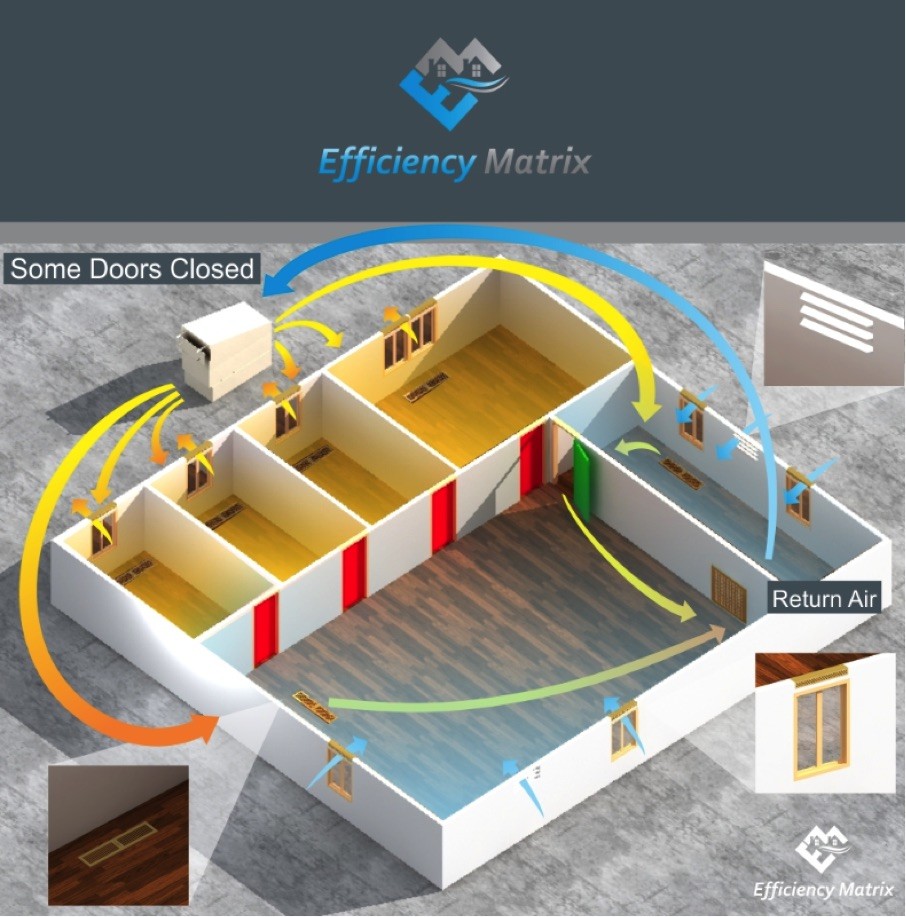
2. The second priority is to install door vents into all rooms, so that air can freely mix with air throughout the house. Enable overall better air quality. Ducted heating systems also require a return path. Otherwise, when heating a room, it could become pressurized, which in turn depressurizes the building, where the return air is located.
3. Thirdly, install a ceiling fan in all bedrooms/or just use a bedside fan which can direct air towards an open door, to enable greater air movement.
4. Optionally install a HRV/ERV ventilation system, which is designed to provide enough fresh air to each area that requires it, and extracts enough air from other areas like toilets, bathrooms, laundry and the kitchen to create a balanced ventilation system. Click here if you’d like to find out more about Energy Recovery Ventilation.
If you don’t have an interconnected smoke alarm system in place, sleeping with the door closed is the safest option in case of a fire starting in the home. If you suffer from poor quality sleep, try upgrading your smoke alarm system, and putting in place some ventilation strategies encouraging air movement into the rest of the house from the bedroom.
References
Brain Performance operating in elevating CO2
http://www.sciencedirect.com/science/article/pii/S1877705813007558
Feng Shui
NFPA
https://www.qfes.qld.gov.au/community-safety/smokealarms/Documents/New-Smoke-Alarm-Legislation.pdf
Ducted Heating Return
http://www.greenbuildingadvisor.com/blogs/dept/musings/return-air-problems